Cathedral Gorge After Dark: Stargazing at an Always-Open Park
Planning to see the night sky at Cathedral Gorge can raise a practical question: does an always-open park mean you can arrive after dark and stay as long as you like? It answers one important question about the park’s status, but it does not settle every detail of nighttime access, services or camping. Careful planning helps you enjoy the sky without mistaking “open” for “everything is available.”
What “always open” means for a stargazing visit
According to Nevada Division of State Parks, Cathedral Gorge State Park is Always Open. That makes it a candidate for a visit outside the usual daytime sightseeing window, but the phrase alone should not be treated as a promise that every facility, road, service or activity is available at every hour.
A park’s general open status and the conditions for a particular visit are different things. You still need to check the current official park information for any access notices, closures, conditions or instructions that could affect your route and plans. If an entrance, road or particular area has posted restrictions, follow those rather than assuming the park’s general status overrides them.
It also helps to separate three questions:
- Can you enter the park? Check the current information from Nevada Division of State Parks and any notices that apply to the route or area you plan to use.
- Can you stay overnight? Confirm that your overnight plan fits the park’s camping arrangements and rules. An open park is not automatically permission to camp anywhere.
- Will the services you need be available? Verify details such as restrooms, water, visitor services or other facilities directly with the official park information before you rely on them.
This distinction matters most if you are arriving late, traveling a long distance or planning a visit around a specific stargazing window. A late-night arrival can be harder to adjust than a daytime visit: you may have less visibility, fewer services to rely on and less time to solve a problem before settling in.
For a broader approach to checking night access at other parks, see Stargazing at Nevada State Parks: How to Check Night Access. For Cathedral Gorge-specific camping details, Cathedral Gorge Campground: Ramadas, Hookups and Year-Round Showers is a useful companion. Treat each page as a starting point for planning, then check official park information for current conditions before setting out.
Open does not mean unrestricted
The word “open” can sound more comprehensive than it is. It describes the park’s overall status, not necessarily a guarantee that every route or facility is accessible at every hour. Conditions can also change, so a detail that was true when you began planning may need to be checked again close to departure.
Think of the open status as one piece of the plan, not as a substitute for checking local instructions. If you see signs at the park, follow them. If the official information identifies a closure or limits access to a specific area, build your plans around that notice.
Camping is a separate question
Stargazing after dark and camping overnight are related, but they are not interchangeable. A visitor who plans to stay overnight should confirm which camping options apply, whether a reservation is needed for the intended dates, and what arrangements are available for arrival. Do not assume that a place suitable for viewing the sky is also a permitted place to sleep.
The article Do You Need a Reservation to Camp at Cathedral Gorge? can help with the reservation question. For general details on how stays and facilities are described at the campground, see Cathedral Gorge Campground: Ramadas, Hookups and Year-Round Showers. Confirm current availability and conditions through the official reservation system and park information rather than relying on assumptions based on the park being open.
Plan the visit around the whole night
A successful stargazing outing is more than finding a dark-looking spot and looking up. It involves the drive in, the time you arrive, the place you are allowed to be, how you will protect your night vision and how you will leave safely.
Choose your timing with flexibility
Before choosing a departure time, check the forecast and the park’s current access information. Clouds, wind, dust or other uncomfortable conditions can make a night under the sky less rewarding, even if the park is open. If the weather is poor or access information changes, be ready to postpone or adjust the plan.
Avoid building the outing around a single exact arrival time unless you have confirmed how entry and your overnight arrangements work. Allow time for the drive, locating the appropriate area and getting settled without rushing. If your plan depends on arriving after dark, check in advance how to reach the permitted destination and what you should do if you cannot find it safely.
A daytime arrival may be easier if you are unfamiliar with the route or the place you intend to stay. You can orient yourself before visibility drops, read posted instructions and prepare your equipment while it is still light. If a daytime arrival is not practical, download or carry the official information you need before leaving an area with reliable connectivity.
Check the sky and weather separately
A clear forecast does not guarantee that the stars will be easy to see. Clouds can develop, and haze, dust or other atmospheric conditions may reduce contrast. Consider the forecast as one input, not a promise of viewing conditions.
Before leaving, ask yourself:
- Is the sky expected to be clear during the hours you plan to be outside?
- Could wind or dust make it uncomfortable to sit or stand still?
- Will temperatures change enough that you need extra layers?
- Is there a safer option if the weather turns?
- Can you comfortably make the return drive if you decide not to stay?
Bring clothing for standing still after sunset, not just for the conditions you feel while moving around in daylight. A warm layer, a wind-resistant outer layer and appropriate footwear can make a long wait more comfortable. Keep rain or weather protection accessible rather than buried beneath other gear.
Do not let an attractive sky forecast override a warning or a closure notice. Conditions on the route and at the park matter just as much as conditions overhead. Check again shortly before departure, and follow the official directions if they differ from your plan.
Decide what you want from the outing
A visitor hoping for a quick look at the stars needs a different setup from someone planning a long night of observing. Decide whether you want to watch the sky from a permitted place near your vehicle, spend time walking within an allowed area, or combine stargazing with a campground stay. Then confirm that the intended activity fits the current rules and access conditions.
For a short stop, keep your equipment simple and your route easy to retrace. For a longer session, plan for warmth, water, rest and safe storage of gear. If you are camping, keep the campsite and stargazing plans distinct: your camping arrangements govern where you stay, while park access instructions govern where you may go.
A written plan can also help a group stay together. Agree on where to meet if anyone needs to step away, which lights are appropriate, and when you will pack up. These small choices reduce confusion when visibility is limited.
Protect night vision and keep the setup simple
Stargazing is easier when your eyes have time to adjust to darkness. Bright lights, especially sudden ones, can make faint objects harder to see. A little preparation prevents the group from repeatedly starting over.
Use light thoughtfully
Keep lights pointed down and use only as much illumination as needed to move safely or handle equipment. Avoid shining a bright light across other visitors or toward the sky. If a light has a dim setting, use that when it is enough to see your immediate surroundings.
Do not make darkness an excuse to walk without seeing where you are going. Use a light when safety requires it, and pause before moving through an unfamiliar area. The goal is not to eliminate all light; it is to balance visibility with care for other people’s night viewing.
Screens can also be bright. Lower the brightness before you step outside, and keep a map or observing notes available without repeatedly lighting up the area. If you rely on a phone for navigation, download what you need ahead of time and consider how you will keep the screen from disrupting your vision.
Bring only useful observing gear
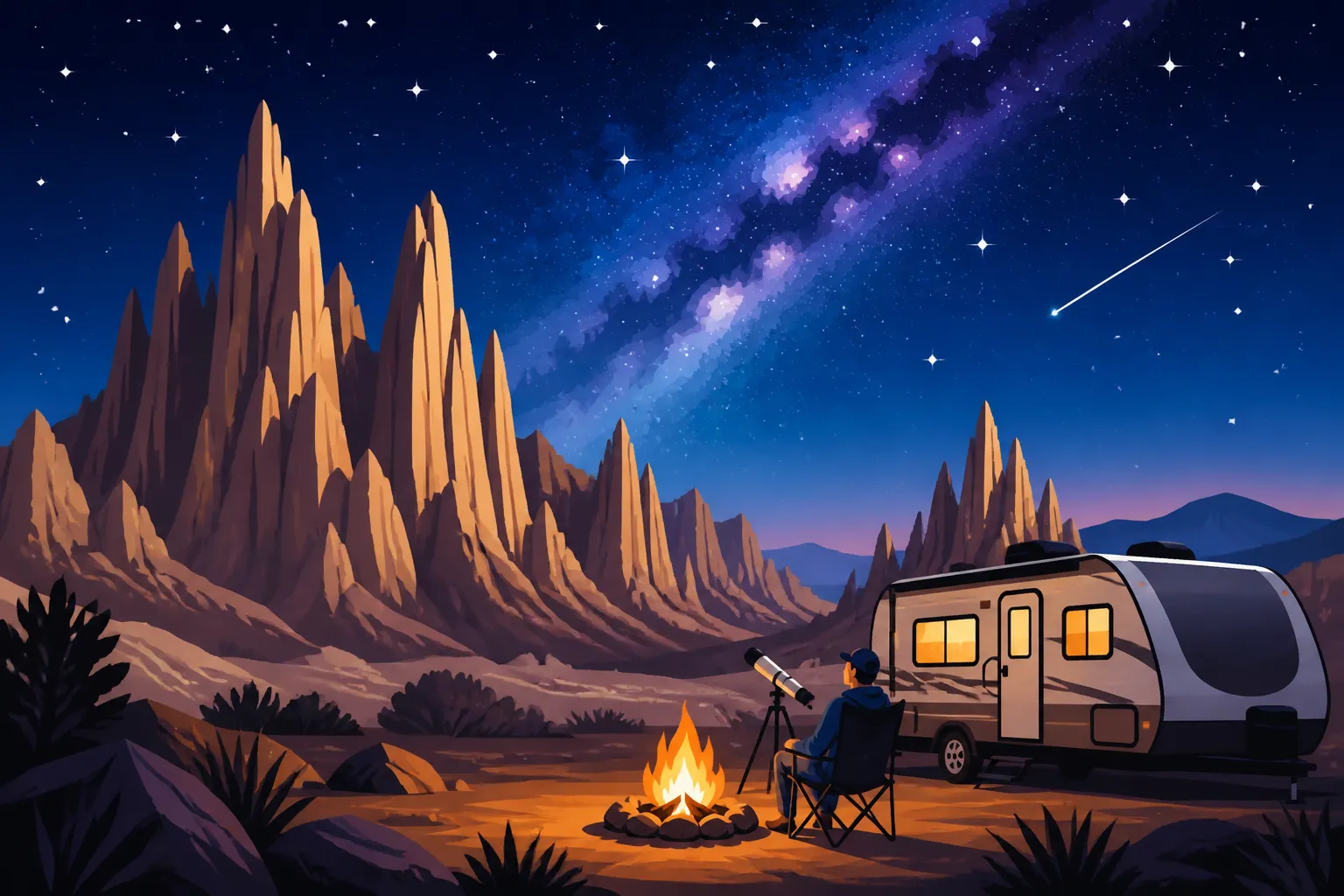
You do not need complicated equipment to enjoy the night sky. Start with comfortable seating, warm clothing, water and a way to identify what you are looking at. Binoculars can be easier to carry and set up than a telescope, while a telescope requires a stable surface, time to assemble and careful attention to where it can be used.
A simple kit might include:
- A chair or pad that is comfortable for sitting still.
- A warm layer that can be added as the temperature changes.
- A low-brightness light for safe movement and equipment handling.
- A printed or downloaded sky map or observing list.
- Binoculars, if you have them and are comfortable using them.
- Water and a small snack, packed so they are easy to reach.
- A bag for carrying out everything you bring.
Choose equipment you already know how to use. An unfamiliar mount, app or telescope can take up the best part of the evening while you troubleshoot. If you want to try a new device, learn its basic setup at home and charge or prepare it before you leave.
Set up without blocking others
Select a location only after confirming that it is appropriate for your activity. Keep walkways and access points clear, and avoid spreading gear into areas that other visitors need. If you are near other people, ask before pointing a light or setting up equipment close to them.
Keep conversations low, especially if someone nearby is observing or resting. A quiet setting improves the experience for everyone and makes it easier to notice what is happening around you. Pack and adjust equipment carefully rather than moving around repeatedly with bright lights.
Do not rely on a map image or a stargazing app to decide where you are allowed to go. Use official park information and posted directions for access; use astronomy tools only to help identify what is in the sky.
Prepare for navigation, safety and a late departure
A nighttime visit can make ordinary travel tasks more difficult. A route that is straightforward in daylight may be confusing after dark, and a minor issue can take longer to resolve if you are tired or have limited connectivity.
Make the arrival and exit plan before you drive
Check the route using reliable information before setting out. Save the directions and any official park instructions somewhere you can access without a network connection. If your route includes an unfamiliar turn or an unpaved segment, review that detail in daylight when possible and confirm current road conditions.
Tell someone where you plan to go and when you expect to check in again. Set a simple plan for what you will do if you are delayed, lose your route or need to leave early. Keep enough fuel and supplies for the trip you have planned, and do not assume that you will be able to find services late at night.
Before leaving your vehicle, take a moment to note where it is parked and how you will return to it. Avoid wandering beyond the area you have confirmed is appropriate. If you cannot identify your location or a safe route, stop and reassess instead of continuing farther into darkness.
Keep the group together
If you are visiting with others, agree on a meeting point and a way to communicate before everyone spreads out. Stay within sight or hearing where practical, and avoid sending one person alone to search for a spot or vehicle in the dark. Children and anyone unfamiliar with the area need clear boundaries and close supervision.
Carry personal essentials with you when moving away from the vehicle, and let the group know before you leave the immediate area. If someone becomes separated, return to the agreed meeting point rather than having everyone search in different directions.
For a solo visit, make the plan more conservative. Keep the route simple, stay near the place you have identified in advance and let someone know when you expect to be back in contact. A solo stargazing session should not depend on exploring unfamiliar areas at night.
Know when to end the session
Fatigue can creep up during a quiet night outdoors. If you are struggling to stay alert, cold, uncomfortable or uncertain about the return route, pack up and leave rather than extending the session. A shorter, safe visit is better than pushing on because you hoped to see one more object.
Before driving, gather and secure your equipment, check that nobody is left behind and confirm your route. If you are too tired to drive safely, do not treat the park’s open status as a reason to continue. Use the overnight plan you verified in advance, or choose a safer alternative.
For broader advice on remote routes and preparation, see Driving to a Remote Nevada State Park: Fuel, Water and Signal. If weather is part of the decision, Weather Checks Before a Weekend at a Nevada State Park can help you think through what to review before departure.
Combine stargazing with a campground stay carefully
Camping can make a late-night sky session more practical by giving you a planned place to sleep, but it adds its own questions. Confirm that the campground is suitable for your dates and setup, understand the booking details and check the rules that apply to your campsite.
Verify the site and reservation details
Use the official reservation information to confirm availability and the specific site details that matter to you. Check whether your vehicle and equipment fit the site, what facilities are listed and what arrival instructions apply. Details can vary by site, so do not assume that one listing describes every campsite.
The article Campground Maps and Loop Layouts: Picking a Nevada Park Site Online offers a way to think through site selection. For booking steps, see Reserve Nevada Walkthrough: Account, Site Search and Checkout. Confirm all current conditions directly through the official reservation system before leaving.
If you have not secured a campsite, do not assume you can sleep in a parking area or another convenient spot. Check the official park information for the places and arrangements where overnight stays are allowed. The camping limit is a separate issue from the park’s general open status; for that specific question, see Cathedral Gorge Camping Limit: Days Allowed in a Rolling Period.
Keep the campsite and observing area orderly
Bring only what you need and keep personal gear within the area assigned for your stay. Avoid using bright lights that spill into neighboring sites. When you return from observing, move quietly and keep equipment organized so you are not searching through bags in the middle of the night.
Follow the posted campground instructions for waste, vehicles, pets, noise and other matters. Rules can differ by location, and a practice that seems reasonable elsewhere may not apply at this site. If a detail affects your setup, confirm it with Nevada Division of State Parks or the official campground information before travel.
Do not assume that campsite features are available simply because a campground listing mentions them. Confirm current service conditions, especially if your plan depends on a facility or utility. A campground stay should be comfortable without relying on an unverified amenity.
Keep a backup plan
A campground may not suit your needs if availability, access or weather changes. Decide in advance whether you would postpone, shorten the visit or choose another appropriate destination. Do not make an improvised overnight stop in an area unless official information confirms it is allowed.
You can also plan a stargazing session that does not depend on camping. That may mean arriving with enough time to use the permitted day-visit arrangements and leaving safely afterward. Confirm the relevant access and departure details with the official park information. The right choice depends on your travel distance, comfort with nighttime driving and the arrangements available for your visit.
| Planning question | What to check before you go |
|---|---|
| Is the park open? | Check the official information and any current access notices. |
| Can you stay overnight? | Confirm the permitted camping arrangements and whether a reservation is needed. |
| Can you use a particular area after dark? | Check current access directions and follow posted instructions. |
| Will facilities be available? | Verify the specific service you expect to use with official park information. |
| Is the sky likely to cooperate? | Review the forecast and be ready to change plans. |
| Can you safely arrive and leave at night? | Save directions, plan the route and set a clear backup option. |
Frequently Asked Questions
Does always open mean Cathedral Gorge is open all night?
Nevada Division of State Parks describes Cathedral Gorge State Park as Always Open. Check current official access information and posted instructions for the area and activity you have in mind; the general status does not answer every question about facilities, routes or overnight stays.
Can you camp anywhere in the park to stargaze?
Do not assume that open status allows camping wherever you choose. Confirm the designated camping arrangements, reservation details and applicable rules through the official park information and reservation system.
Should you arrive before dark?
Arriving while it is light can make it easier to orient yourself, read signs and find your permitted destination. If you will arrive after dark, plan the route and access steps in advance, and check current notices before leaving.
What should you bring for a night of stargazing?
Prioritize warm clothing, water, comfortable seating, a dim light for safe movement and only the observing equipment you know how to use. Bring directions and any essential park information in a form you can access without relying on a mobile connection.
Disclaimer
This article is for general informational purposes only and does not constitute professional advice. Laws, prices and regulations vary by location and change over time. Consult a qualified professional for guidance on your specific situation. Nevada Camping & RV is not a government agency and is not affiliated with any government agency.