Annual Day Use Permit: What It Covers and What Costs Extra
The Annual Day Use Permit can simplify repeated visits to Nevada State Parks, but it is easy to mistake entrance coverage for an all-purpose park pass. The key is to separate getting through the entrance from paying for activities and facilities once you arrive. Here’s what the permit covers, what remains extra, and how to decide whether it fits your plans.
What the Annual Day Use Permit is for
The Annual Day Use Permit is an entrance-fee option for people visiting Nevada State Parks. According to the Nevada Division of State Parks, it covers entrance fees at all parks in the system for 12 months. That makes it relevant to visitors who expect to enter parks repeatedly, whether for short stops, picnics, sightseeing or other day visits.
The permit’s central benefit is narrow but useful: it addresses the entrance fee. It does not turn every visit into a no-cost outing, and it should not be treated as a bundle of camping, boating or facility charges. Thinking of it as an entrance-fee permit, rather than a general park-access package, helps prevent surprises when planning a trip.
That distinction matters even if you are visiting for a simple reason. You might plan to walk around, take in the scenery and leave without using a campground or reservable facility. In that case, entrance coverage may be the main fee question. If you add an overnight stay, a boat-related charge, a group-use area or a special event, you need to consider those costs separately.
For a quick overview of different kinds of charges, see Fees at Nevada State Parks Explained: Entry, Camping and Extras. If your visit is focused on a short stop rather than an overnight stay, Visiting a Nevada State Park for the Day Without Camping may also help you think through the trip’s scope.
The permit’s stated coverage applies to parks across the system, rather than only to one named destination. Still, it is sensible to confirm the current permit conditions with the Nevada Division of State Parks before relying on it. In particular, check how the permit must be presented or associated with a visit, and whether any details affect your situation. The coverage description alone does not answer every practical question about using a permit.
As of November 2026, according to the Nevada Division of State Parks, the Annual Day Use permit costs $100. Treat that as the permit’s stated cost, not as an estimate of your full trip budget. You may still have charges for activities, facilities or services that fall outside entrance coverage. For a broader comparison of annual permit types and their stated prices, see How Much Do Nevada State Parks Annual Permits Cost?.
What the permit covers, and what it does not
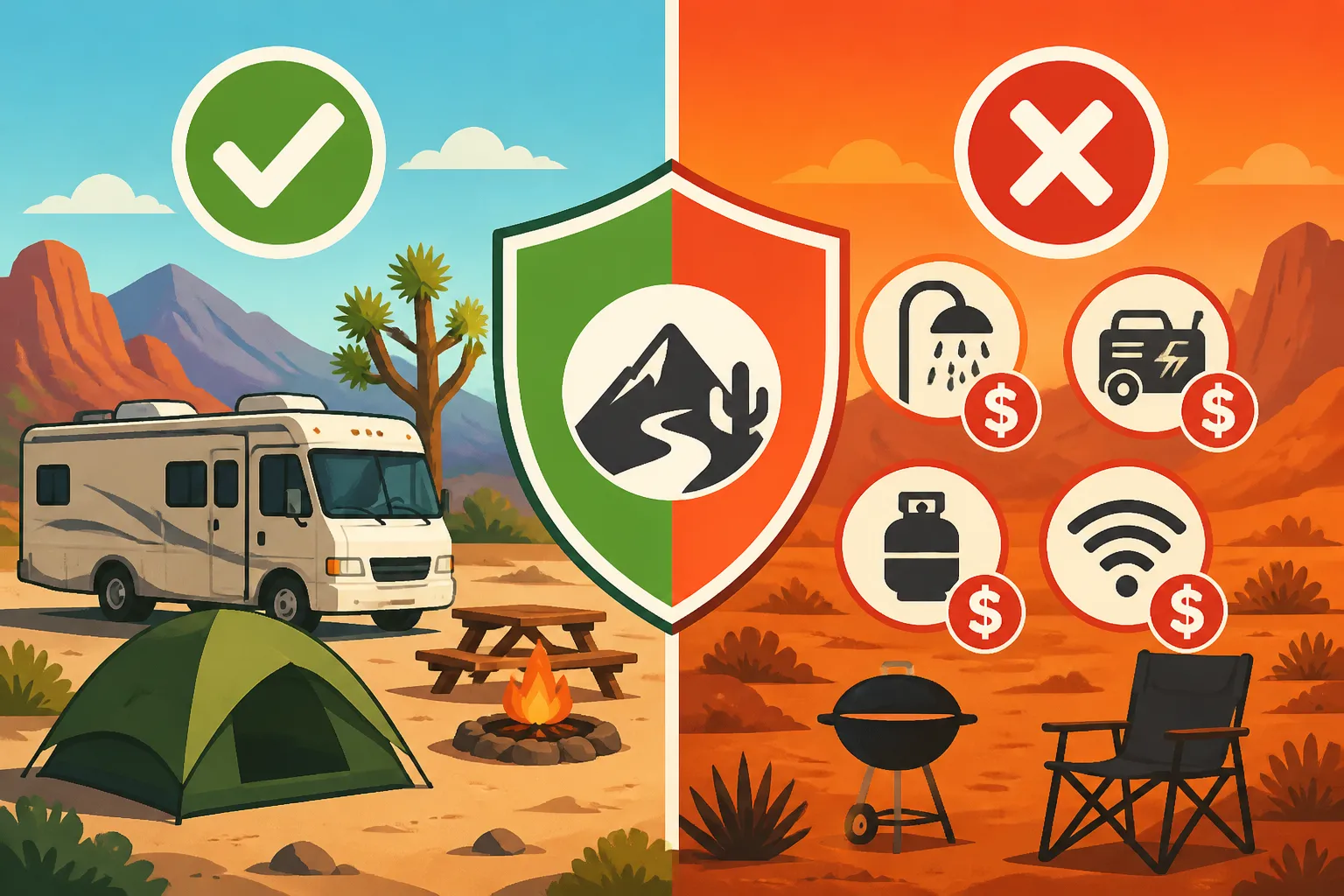
The most useful way to assess the permit is to sort your expected expenses into two categories: entrance and everything else. The Nevada Division of State Parks says the permit provides entrance to all parks without paying the entrance fee for 12 months. It also says the permit does not cover camping, boating, hookups, group use areas or special events; an additional fee is required for camping, boating.
That does not mean every park visit will involve every kind of extra charge. It means the permit is not the payment for those listed services or uses. Whether an extra fee applies to your own visit depends on what you plan to do and the applicable park arrangements. Check the information for your destination rather than assuming the permit covers an item simply because it is inside a state park.
| Part of the visit | How to think about the permit |
|---|---|
| Entering a park | The permit covers entrance fees across the state park system for its stated term. |
| Camping overnight | Budget separately; the permit does not cover camping. |
| Boating | Check the boating charges and requirements separately. |
| Hookups | Treat hookup charges as separate from entrance coverage. |
| Group use areas | Confirm the applicable costs and arrangements with the park. |
| Special events | Check event requirements and fees separately. |
The table is a planning summary, not a promise that every park offers each activity or facility. A listed category tells you what the Annual Day Use Permit does not pay for; it does not establish whether a particular destination has that service, what the local terms are, or how to arrange it. Use the destination’s official information for those details.
Camping is the most important distinction for visitors making an overnight trip. The annual day-use permit can address entrance fees, but it is not a campsite reservation and does not pay the camping charge. A campsite may have its own price and conditions, so include those in your planning rather than treating the permit as a camping pass. For a look at how campground charges can differ, see Camping in Nevada State Parks: How Nightly Fees Differ by Park.
Boating is another separate category. If boating is part of the plan, check the applicable fee and any other requirements directly with the park or the official state park information. Do not assume that the permit’s entrance coverage includes the costs associated with boating. The distinction between getting into a park and paying for a particular use remains important even when both happen during the same outing.
The same logic applies to hookups. If your trip involves an RV or another setup that may use hookups, confirm the facility’s availability and charge independently. Entrance coverage does not tell you whether a site has the service you need, whether it is available for your dates, or what it costs. RV Hookups at Nevada State Parks: Which Parks Offer Power and Water can help you identify the questions to check for an RV trip.
Group use areas and special events also call for separate planning. A permit that covers entrance does not, by itself, settle whether a group area or event is available, what approval may be needed, or what the associated charge will be. If a gathering is central to your visit, look into the relevant arrangements before inviting people or setting a date. Group Use Areas at Nevada State Parks: Permits and Booking Rules and What Counts as a Special Event at a Nevada State Park? are useful starting points.
A practical rule is to ask two different questions when budgeting: “What does it cost to enter?” and “What will we pay for what we plan to do?” The Annual Day Use Permit is aimed at the first. The second depends on the trip’s activities and facilities, and may involve separate fees or arrangements.
How to decide whether it fits your plans
The permit is most relevant when you expect to make repeated park visits and want to account for entrance fees across the system. The right comparison is not simply the permit’s price against one planned outing. It is the permit’s cost against the entrance charges you would otherwise expect to pay over the period it covers, while remembering that other trip costs remain separate.
There is no need to guess at how many visits will make the permit worthwhile. Instead, make a simple comparison using the parks you are realistically likely to visit and the entrance charges that apply to your circumstances. If you only have a single destination in mind, compare the permit with the expected entrance cost for that outing. If you have several visits planned, add up the likely entrance charges for those visits and compare that total with the permit cost. Check current park information before doing the math, since entry charges and conditions should be confirmed with the official source.
Do not include camping, boating, hookups, group use areas or special events in the entrance-fee calculation. Those are outside the permit’s stated coverage. If one or more of them are part of your plans, put those costs in a separate column in your budget. That makes the comparison more honest: it shows whether the permit helps with entrance fees without suggesting that it lowers every expense on the trip.
A useful planning worksheet can be as simple as this:
- List the parks you realistically expect to visit during the permit term.
- Note the entrance charge that applies to each planned visit, confirming it with the official park information.
- Add those entrance charges together.
- Compare that total with the permit’s stated cost.
- List camping, boating, hookups, group use areas and special events separately if they apply.
- Recheck permit conditions and park-specific information before setting out.
The worksheet is only as useful as your assumptions. A park you might visit someday is not the same as a visit already built into your plans. Likewise, a trip that includes a campsite should not be counted as if the permit covers the campsite charge. Keep your estimate focused on entrance, then add the rest of the trip budget independently.
This comparison can also help you choose between the Annual Day Use Permit and another permit option. The All Access Permit has a different scope, so compare its coverage with your actual plans instead of assuming that one permit automatically fits every type of trip. All Access Permit Explained: Entry, Camping and Boating in One explains that option, while Should You Buy an Annual Permit Before a Nevada Road Trip? can help frame the decision around a planned route.
The best choice can depend on what your visits look like. A person taking several short outings may care most about entrance charges. Someone planning an overnight RV trip may need to focus more on campsite availability, hookup charges and other costs, even if entrance coverage is also useful. A group planning a gathering may need to research group-use arrangements and event requirements before deciding which permit matters to the budget.
For a single-park trip, compare the permit against that visit’s entrance cost and consider whether you expect to use it again during its term. For a multi-park trip, estimate entrance charges across the destinations you actually intend to visit. For a camping trip, keep the campground charge separate. These comparisons avoid a common budgeting mistake: treating a permit that covers one part of the visit as though it pays for the entire trip.
If the permit seems like a fit, verify the conditions before purchasing or relying on it. Confirm the official description, the term, how to use it and any details that apply to your vehicle or party. The available coverage statement explains the entrance benefit but does not answer every question about eligibility, display or use. Those details should come from the Nevada Division of State Parks.
Plan the visit around the remaining costs
Once you know the permit is an entrance-fee tool, planning becomes more straightforward. Start with the purpose of the visit. Are you stopping for a day visit, staying overnight, using an RV hookup, boating, meeting a group or attending an event? Each answer changes which costs and arrangements you need to check.
For a day visit, confirm the destination’s entrance information and whether any specific activity or facility on your itinerary has an additional charge. The permit’s broad entrance coverage is useful context, but it does not replace checking current details for the place you plan to visit. If you are going to more than one park, confirm the arrangements at each destination rather than assuming every park handles all activities the same way.
For an overnight stay, make campsite planning a separate task from permit planning. Check whether the campground suits your equipment, whether a site is available and what the camping charge is. If you are bringing an RV, check whether the site offers the facilities you need and whether those services involve additional costs. A permit can help with entrance while leaving the core overnight expenses untouched. For the question of whether a campsite includes car entry, see Does a Nevada State Park Campsite Include Car Entry?.
For a group visit, do not treat the Annual Day Use Permit as a substitute for arranging a group use area or special event. Establish what kind of gathering you are planning, then check the relevant park information. The applicable requirements may depend on the type of use, and the permit’s entrance coverage alone does not tell you what to reserve or pay for. If your visit is a reunion or celebration, Hosting a Family Reunion at a Nevada State Park Group Area offers a useful planning angle.
For a trip involving boating, look up the separate boating information before you arrive. Do not infer from an entrance permit that boat access, launch-related services or other boating costs are included. The park’s official information is the place to verify what applies to the specific outing. If camping and boating are both part of the plan, budget each separately rather than rolling them into the entrance permit.
It also helps to avoid a few assumptions:
- “Annual” means every park expense is covered. The name does not expand the permit beyond its stated entrance benefit.
- “All parks” means every activity at every park is included. The coverage applies to entrance fees, not every facility or use.
- A permit that works for a day visit will cover an overnight stay. Camping charges are outside the stated coverage.
- The permit tells you whether a service is available. It does not establish campground, hookup, boating or group-area availability.
- The permit removes the need to check trip details. Park-specific conditions and costs still deserve a check before departure.
These are not just technical distinctions. They affect how you compare options and what you bring into your budget. If the permit covers the entrance portion but your group expects to camp, the campsite charge remains relevant. If you are planning a special event, the permit does not resolve the event arrangements. A clear budget separates the entry benefit from all additional uses.
Before leaving, make a final check of the official information for your destination and the permit itself. Confirm that the permit remains appropriate for your trip, review the charges for any planned activities, and verify details that are not answered by the general coverage description. If your itinerary changes, revisit the cost assumptions: adding an overnight stay or a group-use area may add expenses that were not part of the original day-visit plan.
Frequently Asked Questions
Does the Annual Day Use Permit cover all Nevada State Parks?
The Nevada Division of State Parks describes entrance coverage across all parks in the system. Check the official permit conditions for practical details about its use.
Does it pay for a campsite?
No. The permit does not cover camping, so check the campground’s separate charges and arrangements before planning an overnight stay.
Are hookups, group use areas and special events included?
No. Those uses are outside the permit’s stated coverage. Confirm availability, requirements and costs with the relevant park information.
Is the permit worth it for one visit?
Compare its stated cost with the entrance charge for the visit, and consider whether you expect to make other visits during the permit term. Keep any additional activities or facilities out of that entrance-fee comparison.
Sources
- Nevada Division of State Parks — Annual Permits | State Parks (checked November 23, 2026)
Disclaimer
This article is for general informational purposes only and does not constitute professional advice. Laws, prices and regulations vary by location and change over time. Consult a qualified professional for guidance on your specific situation. Nevada Camping & RV is not a government agency and is not affiliated with any government agency.