Tables, Grills, Fire Rings and Shade at Washoe Lake Campsites
A campsite’s basic setup can shape the whole trip: where you eat, how you cook, and whether you have relief from the sun. At Washoe Lake State Park, tables, grills and fire rings are part of the campsite picture, but shade varies. Here’s how to use those details when comparing sites, planning meals and checking what to expect before you arrive.
What to Expect at a Washoe Lake Campsite
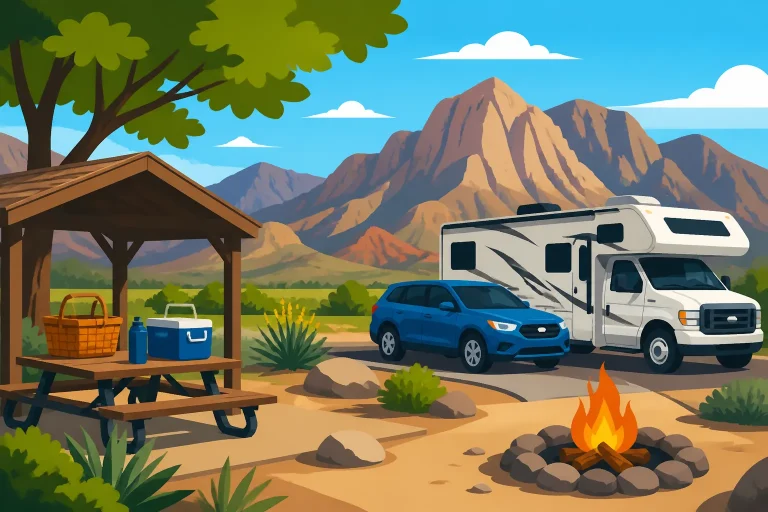
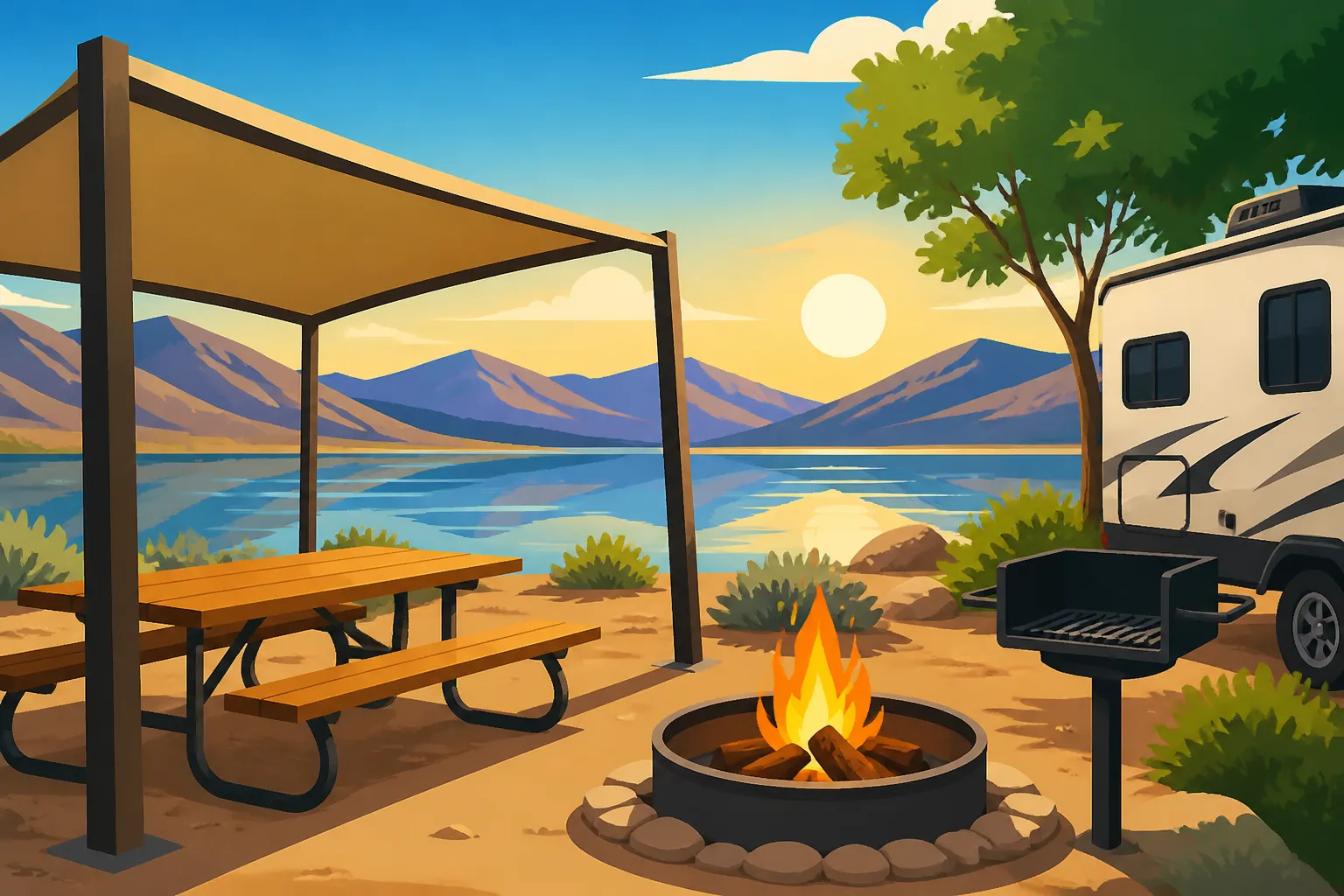
According to the Nevada Division of State Parks, the park has 49 sites, each with a table, grill; each campsite also has a fire ring. That provides a useful baseline when you are deciding what to pack: the listed campsite setup includes places to sit and prepare food, plus designated equipment for grilling and fires. Shade is the feature that varies from site to site.
According to the Nevada Division of State Parks, some sites are equipped with shade structures. That means you should not assume every campsite has built-in shade. If shade is important for your group, check the individual site details and campground layout before choosing a spot, and confirm the information with Nevada Division of State Parks if anything is unclear.
| Campsite feature | What to plan around | What to check before arrival |
|---|---|---|
| Table | A place to organize meals, supplies or a card game | Its position in the site and whether it suits your group’s setup |
| Grill | A designated place for cooking | Which fuels and cooking methods are permitted under current park rules |
| Fire ring | A designated feature at each campsite | Whether current fire restrictions affect its use |
| Shade structure | Available at some sites | Whether the specific site you are considering has one |
The table is a starting point, not a substitute for site-specific information. A table may be handy for serving a meal but less useful if your group needs open ground nearby for chairs. A grill may fit your cooking plan, but its presence does not tell you whether every type of fuel or cooking method is allowed. And a fire ring does not guarantee that a fire is permitted on your visit date.
Think of the listed features as the fixed parts of your planning and the site’s location, layout and current conditions as details to verify. For a broader look at what campsite features can mean for an RV setup, see Tables, Grills and Ramadas: Campsite Features RVers Find in Nevada. For Washoe Lake’s campground context, Washoe Lake’s Year-Round Campground for Winter Trips Near Reno may also help you consider how the site fits your trip.
Choosing a Site When Shade Matters
Shade can make a practical difference even when it is not the main reason for visiting. It may affect where you sit during the warmer part of the day, how comfortable a meal feels, and where you want to place chairs or other gear. Since only some Washoe Lake sites have shade structures, the useful question is not simply whether the campground offers shade, but whether the particular site you are considering has it.
Check the specific site, not just the campground
Start with the site listing and campground map. Look for a shade structure identified for the individual site, rather than relying on a general description of the campground. Maps and online booking pages can help you compare locations, but check that you are reading information for the correct campsite. For tips on interpreting a campground layout, see Campground Maps and Loop Layouts: Picking a Nevada Park Site Online.
If the listing is unclear, contact Nevada Division of State Parks using current contact details from its official website. Ask whether a shade structure is present at the site you are considering and whether the posted site information reflects its current condition. This is especially useful when shade is a priority for someone in your group, or when your plans depend on having a covered place to sit.
A campground map may show the general arrangement of sites without making every feature easy to distinguish. Treat it as a way to narrow your choices, not as proof that a site has a particular structure. If a booking system lets you select a specific site, review the associated description and map together; each may answer a different part of the planning question. Reserve Nevada Walkthrough: Account, Site Search and Checkout covers the practical side of navigating the booking system.
Plan for open sun as a possibility
Even if a site has a shade structure, do not assume it will cover every part of the campsite or provide shade throughout the day. The shade may fall differently depending on the position of the structure and the sun. Bring portable shade if your plans require more coverage, while checking the park’s rules about canopies or other equipment before setting one up.
It also helps to plan your campsite arrangement with the available shade in mind. Keep the table and chairs where they are most useful, but consider whether you want a shaded sitting area or a clear path between the vehicle, cooking area and table. If you arrive and find the available shade does not match your expectations, avoid blocking shared access or placing gear in a spot that conflicts with posted directions.
Portable shade is a backup, not a reason to skip the site check. Some campgrounds may have layout or use restrictions that affect where equipment can go. Confirm applicable rules with Nevada Division of State Parks, and read any instructions provided for the site.
Match shade expectations to your group
Different groups may value shade differently. Someone who expects to spend much of the day at the table may care more about shade than a group planning to be away from the site for most daylight hours. An RV traveler may want shade for the sitting area, while a tent camper may be focused on the placement of the tent and cooking space. None of those needs can be settled by the campground-wide fact that some sites have shade structures; compare the specific site with your own setup.
For a group with varied needs, make the choice together before booking if possible. Decide which features are essential and which are preferences. A site with a shade structure may be the first choice for a group that wants a covered place to gather; another site may work if you bring an allowed portable option and are comfortable with more sun exposure.
Using the Table, Grill and Fire Ring
The table, grill and fire ring give you useful fixed points for organizing a campsite. Planning around them can make a small space easier to use and help keep cooking, eating and relaxing from competing for the same area. The key is to treat each feature as part of the site layout while following current park directions.
Set up meals around the table
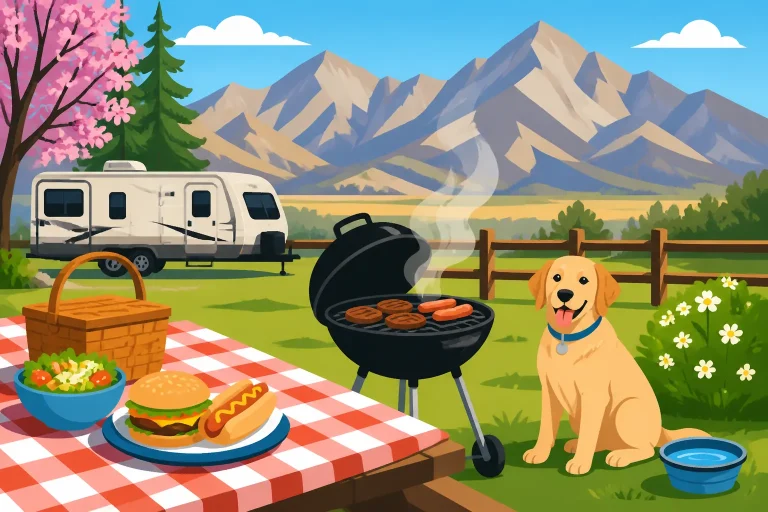
Before unpacking, take a moment to see how the table sits in relation to your vehicle, cooking area and the rest of the site. Put food and meal supplies where they are easy to reach without turning the table into a storage shelf for the whole trip. If you have a group, decide where serving and eating will happen so people are not constantly moving bags and equipment.
A campsite table is a useful surface, but you may still want to bring items that make meals easier: reusable dishes, a washable table covering, paper towels or a small container for meal supplies. Keep food and trash managed rather than leaving them scattered around the site. For advice on campsite food storage in different settings, see Coolers, Canisters and Lockers: Critter-Proof Camp Food Options.
If the table’s location is fixed, organize the rest of the campsite around it rather than expecting to reposition the feature. Keep an accessible route through the site, especially if members of your group need room to move around comfortably. Do not use the table as a substitute for checking the site’s capacity, layout or accessibility details.
Treat the grill as an amenity, not a complete cooking plan
A grill at the site may be useful for a simple meal, but the campsite listing does not answer every cooking question. It does not specify which fuels are allowed, whether you need to bring cooking tools, or whether restrictions will affect use during your visit. Check current directions from Nevada Division of State Parks before you rely on the grill as your only cooking option.
Bring a backup plan that suits your trip. That might mean food that does not require grilling, or another cooking method only if current park rules allow it. When preparing to cook, use the designated equipment as directed and keep your supplies organized so that hot items and food are not mixed with general campsite clutter.
A grill can also affect how you arrange the table and chairs. Leave enough working space to prepare and serve food without creating a busy passage through the cooking area. Keep children and pets away from hot surfaces, and do not leave cooking equipment unattended. These are general precautions; follow any additional site instructions from park staff.
Check fire restrictions before using a fire ring
The presence of a fire ring is not a guarantee that a campfire will be permitted on the day you visit. Fire restrictions can change, so check the applicable official notices before leaving and again when you arrive. Use the current directions from Nevada Division of State Parks and follow posted signs and staff instructions at the park.
Do not rely on a previous visit or an old trip report to determine whether a fire is allowed. Restrictions may differ by time and location, and a change in conditions can affect what is permitted. For a broader explanation of how to check the rules for a Nevada campsite, see Fire Rules Depend on the Land Manager: Checking a Nevada Campsite and Which Nevada State Parks Allow Campfires, and Where in Each Park?.
If the rules allow a fire, use the designated fire ring as directed. Keep the area around it clear of belongings, never leave a fire unattended, and make sure it is fully out before leaving it. If current restrictions prohibit fires, do not treat the installed ring as an exception. Check official notices again on arrival, because that is when you can confirm the instructions applying at the campsite.
Planning Before You Book and Before You Leave
The simplest way to avoid disappointment is to separate what is known about the campsite features from what needs to be checked for your selected site and travel date. Each site has a table, grill and fire ring, but shade structures are available only at some sites. Site-specific information and current park instructions help fill in the rest.
Before booking, consider what your group needs from the site. If shade is essential, look for a specific site description that identifies a shade structure and verify the detail if the listing does not make it clear. If a grill or fire ring is central to your meal plans, remember that current rules may affect their use. If you are traveling by RV, compare the site’s dimensions and layout with your vehicle rather than assuming the basic amenities tell you whether it will fit. An RV Site Checklist for Reserve Nevada: Length, Hookups, Pad Type offers a separate checklist for that part of the decision.
Before leaving, review the campsite information again and gather the equipment that depends on your choice. Bring cooking supplies that match your plan, plus a backup meal option. Consider portable shade if the selected site lacks a shade structure or if the listed coverage may not suit your group. Pack chairs, water, and the items you need to keep the table area organized.
At the park, check posted signs and directions before setting up. Confirm the location of the table, grill and fire ring, and arrange your gear so those features remain usable. If a structure or amenity looks different from the listing, ask park staff for current guidance instead of making assumptions. For practical questions about Washoe Lake’s camping setup, Washoe Lake Hookup Sites in Loop A and the Dump Station Renovation may help with related campground planning, though utility details and site amenities are separate questions.
Wind and dust can also affect how comfortable a campsite feels and how securely you need to arrange loose items. Secure lightweight gear and keep food and supplies contained when they are not in use. For more preparation ideas, see Wind and Dust at Nevada State Park Campsites: Securing Your Setup.
A quick pre-trip check can keep the basics clear:
- Confirm whether the specific site has a shade structure.
- Review the site layout and any information that affects your setup.
- Check current fire notices before departure and again on arrival.
- Bring cooking supplies and a backup meal plan that fit current rules.
- Pack portable shade only after checking whether and where it may be used.
- Follow posted directions and ask Nevada Division of State Parks about details that remain unclear.
Frequently Asked Questions
Does every Washoe Lake campsite have a table, grill and fire ring?
The Nevada Division of State Parks lists a table, grill and fire ring at each of the park’s campsites. Check the current campsite information if you want to verify a particular site’s condition or layout.
Do all sites have shade structures?
No. Shade structures are available at some sites, so confirm the feature for the specific campsite you are considering.
Can you use the fire ring whenever you camp?
Not necessarily. Check current official fire notices before you leave and again when you arrive, then follow posted directions and staff instructions.
Should you bring a portable canopy?
It may be useful if your selected site does not have a shade structure, but check Nevada Division of State Parks’ current rules before bringing or setting up additional shade equipment.
Sources
- Nevada Division of State Parks — Washoe Lake State Park | State Parks (checked November 23, 2026)
Disclaimer
This article is for general informational purposes only and does not constitute professional advice. Laws, prices and regulations vary by location and change over time. Consult a qualified professional for guidance on your specific situation. Nevada Camping & RV is not a government agency and is not affiliated with any government agency.