Tent or RV at Valley of Fire State Park: Picking a Campsite
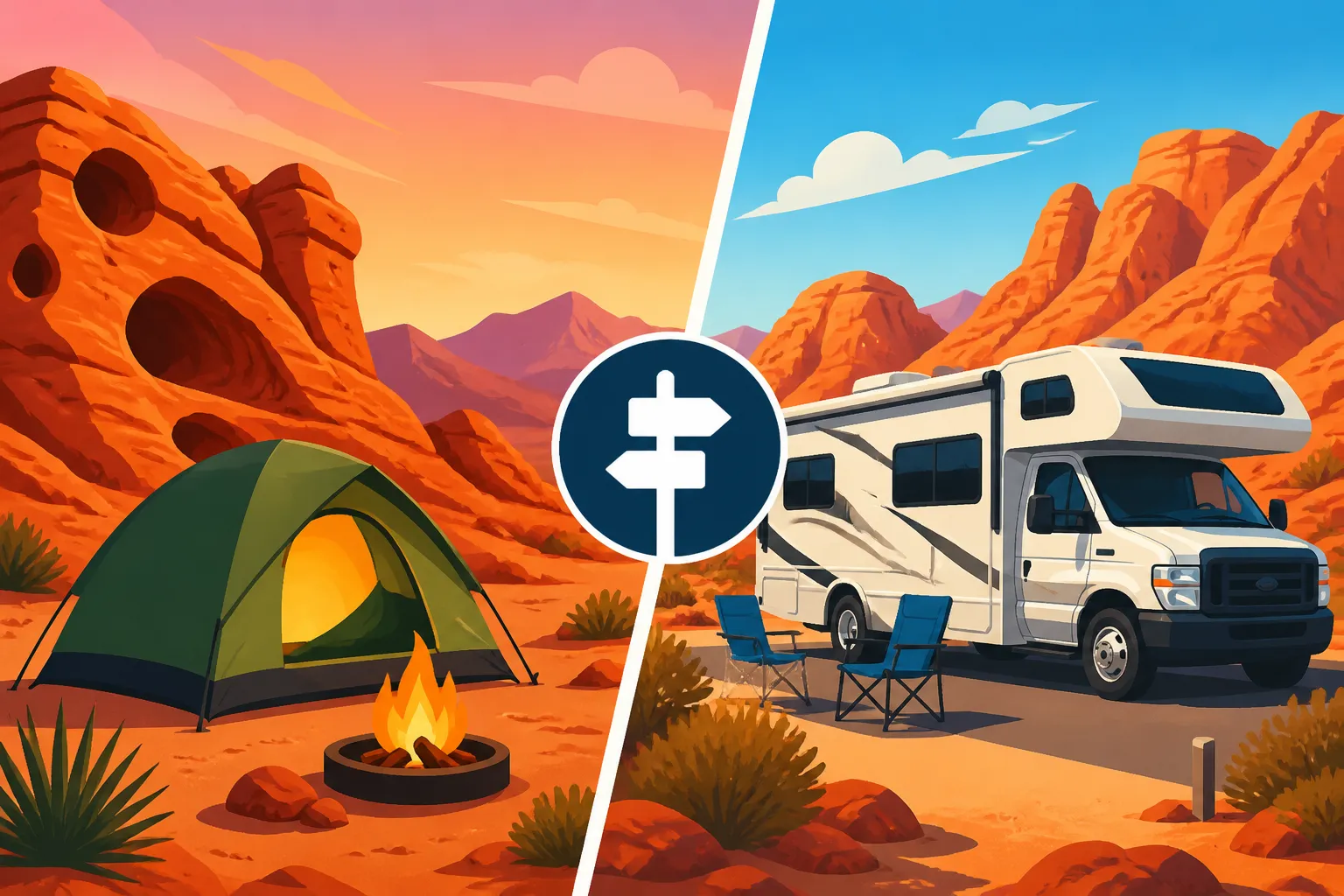
A tent and an RV call for different campsite details, and choosing by scenery alone can leave you with a poor fit. At Valley of Fire State Park, the key is to start with the kind of camping you plan to do, then check that the designated site you select suits your equipment and needs.
Start with the kind of campsite you need
A tent camper and an RV camper may both be looking for a place to sleep, but the practical requirements are different. For a tent, the main questions are whether the site can accommodate your tent and whether its surface, exposure and layout suit your setup. For an RV, you also need to consider the vehicle’s dimensions, how it will fit into the space and whether the site has the services your trip calls for.
Nevada Division of State Parks lists this feature for Valley of Fire: Power and water hookups. That makes hookup availability worth checking if you are choosing an RV site, but it does not mean every campsite has those services. Verify the facilities listed for the specific site before you settle on it.
The first rule for either style of camping is the same. Nevada Division of State Parks directs visitors: Camp only in designated campground sites. Use the park’s official campsite information to identify a designated site and check what kinds of camping it accommodates. Do not assume a spot that looks suitable from a map, road or open area is a campground site.
A useful way to begin is to describe your setup, not just your preferred view:
- For a tent: Note the tent’s footprint, the number of people using it and any extra equipment that needs space. Consider whether you need room for a separate shelter or storage area, and how much exposure you are comfortable with.
- For an RV: Know the overall length and width of the vehicle, including anything that extends beyond its body when parked. Think through where you will place the vehicle, how you will use its doors and whether you need hookups.
- For either: List the amenities you consider necessary, those that would be helpful and those you can manage without. This keeps an appealing site from distracting you from practical fit.
If your trip could work with either a tent or an RV, decide which setup is less dependent on a particular site feature. A tent may offer flexibility in how you pack, while an RV may make certain comforts available within the vehicle. Neither is automatically the better choice: the right fit depends on your equipment, the campsite’s listed features and what you need to be comfortable.
For an overview of campsite details to compare, see What Valley of Fire Campsites Have: Shade, Water, Hookups, Showers. For the booking and availability side of planning, Valley of Fire Campsites: Booking, Walk-Ups and Maintenance Closures covers related questions. Use the official park information to confirm the details for your intended dates and site.
Compare tent and RV needs before picking a site
It helps to compare your options by practical questions rather than treating “tent site” and “RV site” as complete descriptions. Those labels may not tell you everything you need to know about the space, its surface or the facilities provided. Read the listing for the particular site, then check anything that affects how you will set up.
| What to compare | If you are camping in a tent | If you are camping in an RV |
|---|---|---|
| Fit | Compare the tent’s footprint with the site information and any posted layout details. | Compare your RV’s full dimensions with the listed site information. |
| Setup | Think about where the tent, sleeping gear and other equipment will go. | Consider how the RV will park and whether doors or equipment need room to operate. |
| Services | Decide which amenities you need outside the tent, then verify what the site lists. | Check whether the specific site lists the hookups or other facilities you need. |
| Comfort | Consider exposure, sleeping arrangements and how you will manage meals and gear. | Consider what the vehicle already provides and which site services remain important. |
| Backup plan | Identify another designated site that would still work for your tent and gear. | Look for another designated option that can accommodate your RV and its requirements. |
For tent campers, the site’s listed features should help you judge how much of your setup will fit and what you will need to do around it. A small tent does not guarantee an easy setup if you have bulky bedding, cooking equipment or a separate shade shelter. At the same time, bringing less equipment may make more site options workable. Check the official description rather than assuming a bare patch on a map will provide the surface or layout you want.
For RV campers, the fit question is about more than whether the vehicle can reach the campground. Before selecting a site, compare the vehicle’s actual dimensions with the site information and any listed limitations. Account for the full rig as it will be parked, not just the living space. If you tow another vehicle or have equipment that changes the space you occupy, include that in your planning and confirm how the site listing applies.
Hookups deserve their own check. Valley of Fire has RV sites with power and water hookups, but you should confirm that the particular site you are considering includes them. If your RV can camp without hookups, you may have more flexibility, provided the site is suitable and its listed facilities meet your needs. If hookups are important to your plan, treat them as a selection requirement, not a bonus to check after choosing a site.
The same careful approach applies if you are bringing a tent and an RV together. Do not assume one site is designed for both just because your party can fit around the vehicle. Confirm the allowed setup and capacity through the official site details. If the listing does not make a key point clear, ask the park before relying on an assumption.
For broader guidance on checking vehicle fit, see Matching Your Tent, Trailer or Rig to a Nevada Park Campsite. RV travelers can also use An RV Site Checklist for Reserve Nevada: Length, Hookups, Pad Type to organize the details to verify.
Choose based on comfort, equipment and trip style
Once you know what the site must accommodate, think about what will make the trip comfortable. This is where tent and RV camping can feel very different, even when both are allowed at a designated campground site.
A tent can suit a trip when you are comfortable sleeping outdoors and can keep your setup manageable. You will need to think through where sleeping gear, clothing and supplies go, and how you will handle changes in weather or temperature. Pack for the conditions expected during your visit, and make a plan for keeping items protected when they are not in use. The campsite’s official description can help you understand what facilities are available, but it is still worth deciding which comforts you can bring with you and which you can do without.
An RV can make some parts of camp life easier by giving you an enclosed space and a place to keep gear. That convenience comes with a more demanding fit check. A site needs to work for the vehicle itself, and the services it offers need to match your plan. Before choosing, consider whether you will rely on power or water hookups, whether your RV can be used comfortably without them, and what you need to bring if the particular site does not provide a service you want.
Your party’s size and habits matter, too. A solo camper who travels light may have different needs from a family carrying substantial gear. A group using both a tent and an RV should check the site information closely and avoid assuming that a campsite listing covers every combination of equipment. Think about sleeping arrangements, where bags and food will go, how people will move around the setup, and whether the site has the space and features you need.
The choice can also depend on how much of your trip you expect to spend at camp. If you plan to spend much of your time away from the campsite, your priority may be a practical place to sleep and store equipment. If you expect to relax at camp for longer stretches, pay closer attention to the setup space and the comforts you will use there. In either case, choose from the features that are actually listed rather than a mental picture of what a campsite might include.
Fire and cooking plans should be checked separately from campsite fit. Do not assume that a site’s fire feature, if any, establishes what you may use during your visit. Rules and restrictions can change. Check the relevant official information before leaving and again when you arrive. Campfire Rules That Differ Between Nevada State Parks, BLM and Forests explains why the land manager and current notices matter.
If you are choosing an RV mainly for the comfort it provides, make sure the site choice supports that reason. A vehicle with the services you want may still be a poor match if the specific campsite does not suit its dimensions or your setup. If you are choosing a tent for flexibility, make sure your gear list does not quietly add space needs that narrow your options. Matching the campsite to your actual equipment is more dependable than choosing a vehicle or tent based on a general idea of convenience.
Use a site-check process before you commit
A few deliberate checks can prevent common planning mistakes. Work through the details in the same order you will rely on them: whether the site is designated for camping, whether your equipment fits, whether the features meet your needs, and whether the official listing applies to your planned visit.
- Find the designated campground site. Start with the park’s official campsite information. Confirm that the location you are considering is a designated campground site, rather than inferring that camping is allowed somewhere because it appears open or accessible.
- Select your camping setup. Decide whether you are traveling with a tent, an RV or both. If you are still choosing, compare the site requirements against each option and rule out setups that depend on unverified space or services.
- Write down your equipment dimensions. For a tent, include the space occupied by the tent and any separate equipment that needs to be set up beside it. For an RV, use the full dimensions of the vehicle as it will be parked. Do not rely on a rough estimate if the listing provides specific fit information.
- Check the individual site details. Look for the features and restrictions given for the site you want, not just a general campground summary. Verify hookups directly if your trip depends on them.
- Compare alternatives. Identify another designated site that could work if your preferred choice is unavailable or does not meet your setup needs. Keep the alternative realistic: it must suit the same tent or RV and still meet your essential requirements.
- Review current notices before travel. Check the official park information for access, closures or other notices that could affect your plans. Recheck before you leave and when you arrive, especially if a change would require a different campsite or setup.
- Ask about unclear details. If you cannot tell whether your equipment fits, whether a site supports your setup or whether an amenity is included, contact the park using current details on its official website. Do not treat an unanswered question as approval.
When comparing sites online, separate confirmed details from assumptions. A listing that shows a campground location may not answer every question about a particular pad, service or setup. Keep a short note of what you have verified and what still needs an answer. That makes it easier to compare options without confusing the general campground information with the details for the site you intend to use.
If your RV is large, pay special attention to stated site dimensions and limits. Large RV at Valley of Fire State Park? Checking Site Length First focuses on that fit question. If you are trying to interpret the layout, Campground Maps and Loop Layouts: Picking a Nevada Park Site Online offers related planning guidance. Neither a map nor an appealing description replaces checking the current official listing for the site you select.
Finally, set your own minimum requirements before comparing convenience. For example, decide whether hookups are essential, whether a particular tent footprint is non-negotiable or whether you can adjust your gear. That prevents a campsite that looks attractive from pulling you away from the requirements that make the trip workable. The best choice is the designated site that matches your setup and the features you have confirmed—not necessarily the site with the longest amenities list.
Frequently Asked Questions
Can I camp outside a designated campground site if I am in a tent?
No. Nevada Division of State Parks directs campers to use designated campground sites. Confirm that your chosen location is a designated campsite through the park’s official information.
Are power and water hookups available for RV camping at Valley of Fire?
Yes, RV sites with power and water hookups are available. Check the listing for the specific campsite you are considering, since you should not assume the feature is included at every site.
Should I choose a tent or an RV for Valley of Fire?
Choose based on the site’s verified fit and features, your equipment and the comforts you need. If you plan to use hookups, confirm that the particular RV site offers them before you make plans around that service.
What should I check if my tent and RV are both coming?
Confirm that the designated site accommodates the setup you plan to bring, including the space needed for both. Use the specific campsite information and contact the park if the listing leaves an important detail unclear.
Sources
- Nevada Division of State Parks — Valley of Fire State Park | State Parks (checked November 23, 2026)
Disclaimer
This article is for general informational purposes only and does not constitute professional advice. Laws, prices and regulations vary by location and change over time. Consult a qualified professional for guidance on your specific situation. Nevada Camping & RV is not a government agency and is not affiliated with any government agency.