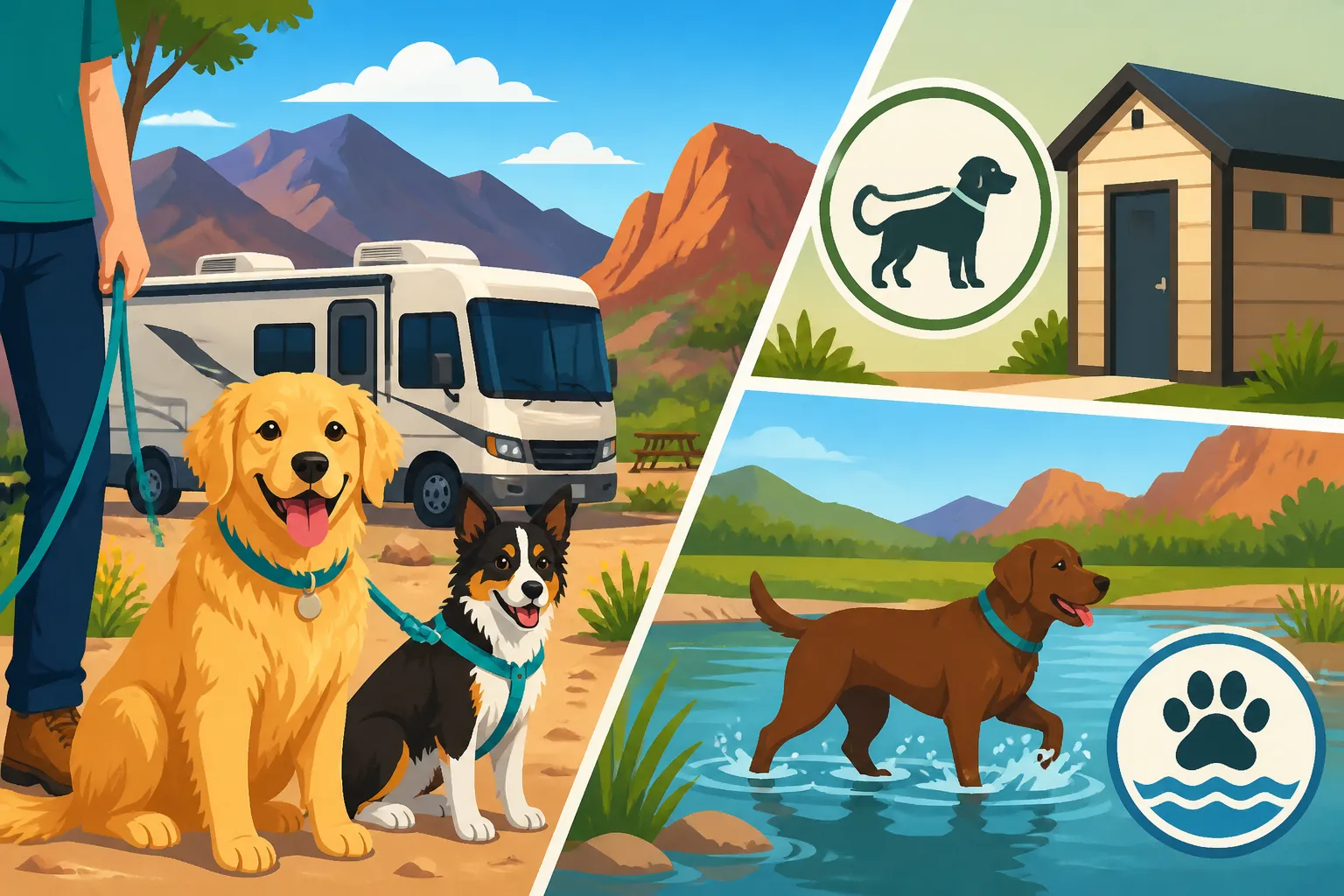
Kershaw-Ryan Pet Rules for Leashes, Buildings and the Wading Pond
Kershaw-Ryan can work for a visit with a pet, but a few details matter before you arrive: the leash has a set maximum, and pets cannot enter certain places. Knowing how to handle the leash and plan around the restricted areas can prevent last-minute changes to your outing.
The Kershaw-Ryan pet rules at a glance
Nevada Division of State Parks allows pets at Kershaw-Ryan, but requires a leash of not more than six feet in length. Nevada Division of State Parks also says, “Pets are not allowed in buildings or in the wading pond.”
Together, these rules give you a straightforward starting point: keep your pet leashed, and plan for your pet to stay out of buildings and the wading pond. They affect how you move around the park and which parts of a visit your pet can join. They do not mean you should assume every other area or activity is automatically open to pets. Follow posted instructions and ask park staff about any place or activity you are unsure about.
| Part of the visit | What to plan for |
|---|---|
| Moving around the park | Keep your pet on a leash that meets the stated maximum. |
| Entering a building | Leave your pet outside; pets are not permitted inside. |
| Spending time at the wading pond | Plan for your pet to stay out of the pond. |
| Adding an activity or visiting another area | Check signs and confirm any local instructions before proceeding. |
Make the pet plan before you reach the park, rather than deciding at the entrance or just before an activity. If someone in your group wants to enter a building or spend time at the wading pond, decide in advance who will stay with the pet and where you can wait without blocking an entrance or path.
If your trip includes an overnight stay, treat pet access and campsite planning as separate questions. A campsite reservation does not answer where a pet can go elsewhere in the park. Review Kershaw-Ryan’s Campground: Restroom, Coin Showers and Tent Sites and What Does Camping at Kershaw-Ryan State Park Cost per Night? for related camping considerations, then check current park information for any pet instructions that apply to your plans.
Getting the leash right and keeping it manageable
The leash limit is not just a detail to check while packing. It shapes how much room your pet has to move beside you and how easily you can manage the pet around other visitors, buildings, and activity areas. Choose a leash that complies with the stated maximum and gives you reliable control, rather than bringing a longer leash and assuming it will be acceptable if you hold it close.
Before leaving home, check the leash itself. A leash can stretch, fray, or have a clip that no longer closes securely. Pack a backup if you have one that also meets the limit. A spare collar or harness can also be useful if your pet’s usual gear becomes uncomfortable or damaged during the outing. These are practical preparations, not extra park rules.
Set up for a controlled walk
A comfortable harness or well-fitted collar helps you guide your pet without needing to pull sharply. Check the fit before the visit, particularly if your pet has grown, gained or lost weight, or is wearing a different harness than usual. Make sure the connection point and clasp are secure.
Keep the leash in hand and short enough to guide your pet around people and obstacles. A retractable leash may be difficult to manage in a busy area, even if you keep it retracted; a fixed-length leash makes its reach easier to judge. Whatever style you bring, make sure its usable length stays within the park’s limit.
Plan small pauses for water and rest, especially if your pet is unused to longer walks or warm conditions. Bring a bowl and water rather than relying on finding water at the point you need it. For more preparation ideas, see Packing Water for a Desert State Park Day in Nevada and Dogs and Desert Heat at Nevada State Parks.
Bring the basics, but avoid overpacking
A simple pet kit can make the visit easier to manage. Consider packing:
- A compliant leash, plus a backup if available
- A properly fitted collar or harness with identification
- Drinking water and a portable bowl
- Waste bags and a way to carry used bags until you find an appropriate disposal option
- Any medication your pet may need during the outing
- A small towel or blanket for a rest stop, if it is useful for your pet
Pack only what you can carry comfortably while also managing the leash. If your hands are full, it can be harder to respond when your pet needs to stop or change direction. A small bag that keeps the essentials together can help, but make sure it does not interfere with your control of the leash.
Think about how your pet usually responds to new surroundings. A dog that pulls toward unfamiliar sights or sounds may need a calmer route and more breaks. A pet that becomes unsettled around crowds may be more comfortable if you visit during a quieter period. These choices do not change the park rules; they help you follow them without turning every stop into a struggle.
Buildings and the wading pond: plan around the limits
The restriction on buildings and the wading pond can affect the shape of your visit. It is easiest to handle when everyone in your group knows about it before arriving. That way, no one is left trying to decide on the spot whether the pet can come along to a particular stop.
For a building visit, arrange for a responsible person to stay with the pet outside. Do not tie the pet where it could block an entrance, interfere with foot traffic, or be left without supervision. If no one can stay with the pet, plan to skip the building visit or take turns, as appropriate for your group. Confirm where waiting is suitable by following posted signs or asking park staff.
At the wading pond, plan for the pet to remain outside the pond area as directed by signs or staff. Do not treat the leash as permission to enter the water or the pond itself. If someone in your party intends to spend time at the pond, decide who will stay with the pet and where you can wait without interfering with other visitors. If the group cannot take turns, choose an outing plan that does not depend on the pond visit.
Make the boundary clear to everyone
The person holding the leash should know the restrictions, but the rest of the group should know them too. A child or visitor who does not handle the pet may assume the pet can follow everyone into a building or into the pond. A short conversation before arrival helps prevent that misunderstanding.
Agree on a simple plan:
- Who will stay with the pet if others enter a building
- Who will remain with the pet if others visit the wading pond
- Where the group will reunite afterward
- What the group will do if no one is available to stay with the pet
The plan does not need to be complicated. It just needs to avoid leaving the pet unattended or trying to bring the pet into a restricted place. If the group changes plans while at the park, pause and decide who will stay with the pet before anyone heads off.
Do not assume other restrictions from these two rules
The stated pet rules identify the leash limit and the places pets cannot enter. For other areas, activities, or temporary instructions, check posted notices and ask park staff. A pet being allowed in the park does not remove the need to follow signs, respect boundaries, and confirm local directions.
If you are comparing parks or planning a longer trip, park-specific pet rules can differ. Leash and Pet Rules Inside Nevada State Park Campgrounds is useful background for campground planning, while Pets in Nevada State Parks: Leash Length and Where Rules Tighten covers broader pet considerations. Check the information for Kershaw-Ryan itself before relying on a rule from another location.
Planning a visit or overnight stay with a pet
Start with the parts of the trip you most want to do. If the building or wading pond is central to the plan, decide whether your group can take turns while someone remains with the pet. If not, consider whether the visit will still work without those activities. That choice is easier before you have driven to the park than after the group has arrived.
For a day visit, keep the schedule flexible. Your pet may need a break, water, or a quieter pause before the rest of the group is ready to move on. Give yourself room to adjust the order of activities or cut a stop short. A schedule that assumes the pet can accompany everyone everywhere is likely to cause avoidable friction.
For an overnight visit, separate the campsite questions from the general pet-access questions. Check the current campsite details and any campground instructions, then consider how you will manage the pet around shared areas and while your group is away from the campsite. Do not assume that permission to bring a pet to the park settles the rules for every facility or campsite activity.
If you are still deciding whether to camp, read Kershaw-Ryan’s Camping Limit and Planning a Return Trip alongside the campground information. For a site that includes a hookup, Booking a Kershaw-Ryan Hookup Campsite Before You Drive Out may help with campsite planning. These details can help shape an overnight itinerary, but they do not replace checking the park’s current pet instructions.
Keep the outing comfortable for the pet and the group
A pet-friendly plan is not only about where a pet is permitted. It also means choosing a pace and setup that your pet can manage. Offer water regularly, watch for signs of stress or fatigue, and give your pet a chance to settle away from busy movement when practical. If the pet is struggling to stay calm on leash, take a break or shorten the visit rather than pressing on.
Be considerate around other visitors. Keep the leash under control as people pass, and give others room if they seem uncomfortable around animals. Pick up after your pet and carry waste bags with you until you can dispose of them appropriately. These habits make it easier for everyone to share the area, regardless of whether they arrived with a pet.
If your pet is not accustomed to staying leashed for an outing, practise before the visit. A short walk close to home can help you see whether the leash and harness fit well and whether your pet responds when you pause or change direction. It can also reveal whether you need a better way to carry water or bags while keeping one hand available.
Check for current instructions before setting out
Before leaving, review the Nevada Division of State Parks’ current Kershaw-Ryan information and any posted notices relevant to your plans. Pay attention to instructions about access, facilities, and temporary changes. If something is unclear, contact the park using current contact details listed by the agency.
Once you arrive, look for signs and follow directions from park staff. If a posted instruction differs from what you expected, follow the direction in place and ask staff for clarification. Avoid relying on old notes, assumptions based on another park, or advice from someone whose visit took place under different conditions.
Keeping the plan simple makes the rules easier to follow: bring a suitable leash, keep your pet out of buildings and the wading pond, and arrange supervision whenever the rest of your party visits those places. With that sorted, you can decide whether a day outing or an overnight stay fits your group.
Frequently Asked Questions
Can I bring my pet to Kershaw-Ryan State Park?
Yes. Keep your pet leashed according to the park’s stated maximum, and plan to keep the pet out of buildings and the wading pond.
Can my dog go inside a park building?
No. Arrange for someone to stay with the dog outside, or skip the building visit if your group cannot supervise the pet.
Can my pet enter the wading pond on a leash?
No. A leash does not change the restriction on pets in the pond. Make a plan for the pet to stay with a person outside while others visit.
What should I check before driving to Kershaw-Ryan with a pet?
Review current park information and posted notices, bring a leash that meets the stated limit, and plan how your group will handle buildings and the wading pond. Check campground details separately if you intend to stay overnight.
Sources
- Nevada Division of State Parks — Kershaw-Ryan State Park | State Parks (checked November 23, 2026)
Disclaimer
This article is for general informational purposes only and does not constitute professional advice. Laws, prices and regulations vary by location and change over time. Consult a qualified professional for guidance on your specific situation. Nevada Camping & RV is not a government agency and is not affiliated with any government agency.