Pets in Nevada State Parks: Leash Length and Where Rules Tighten
A dog can make a Nevada state park trip more enjoyable, but the leash rule is only part of the planning. Pets are welcome at most parks, while the leash requirement is especially clear near campsites and picnic areas. Here’s how to apply that rule, plan around places where access may be limited, and check the details before you go.
The basic pet rule in Nevada State Parks
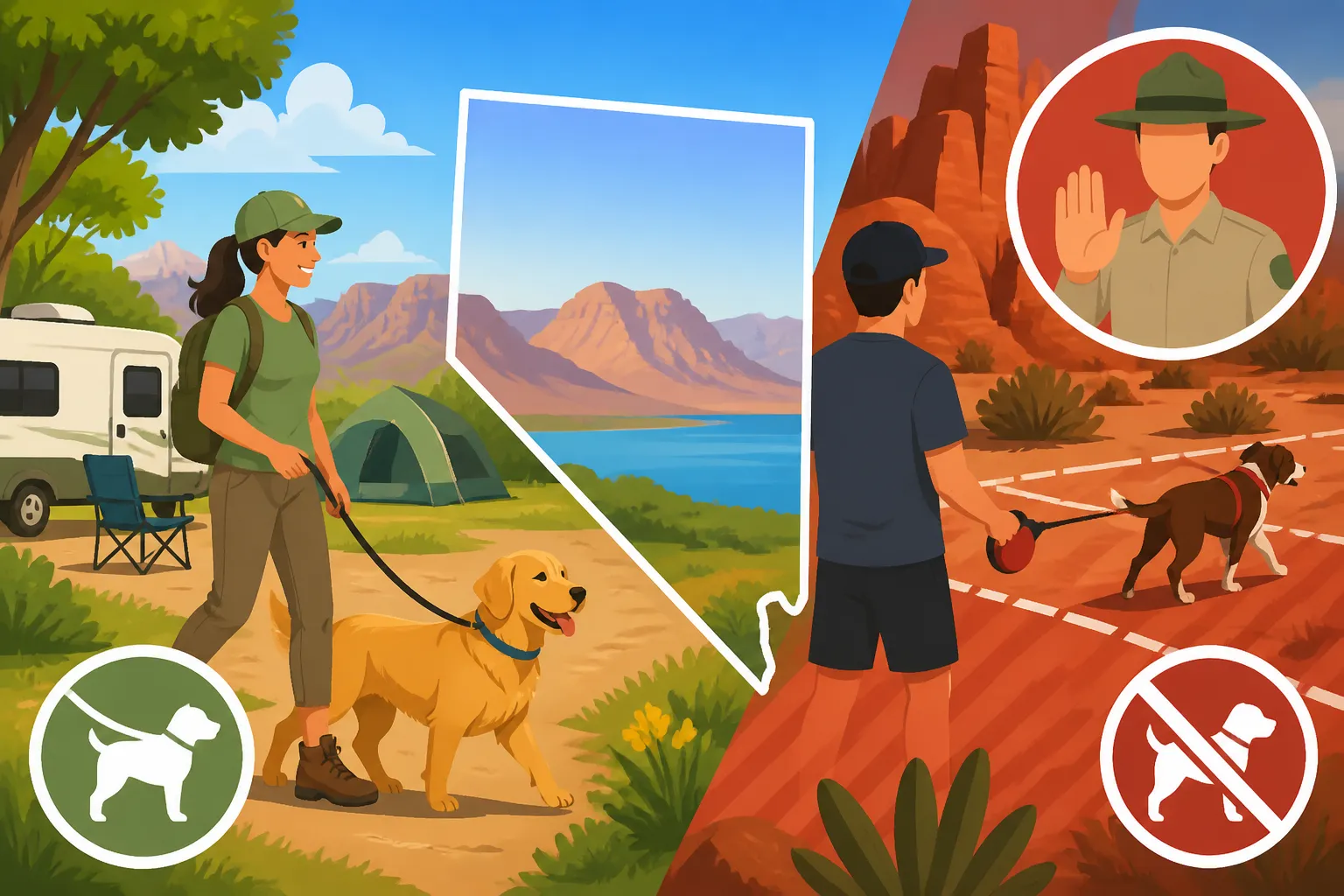
According to the Nevada Division of State Parks, leashed pets (leash no longer than 6 feet) are welcome at most Nevada State Parks. The key points are that pets are welcome at most parks, not necessarily every park or every place within a park, and that visitors should plan to keep pets leashed.
The phrase “at most” matters. It is not a promise that every park, facility, trail, or activity allows pets. Nor does a general welcome settle every question about where a dog may go within a particular park. Before setting out, check the official information for the park you plan to visit and confirm whether any locations or activities have separate limits.
According to the Nevada Division of State Parks, Leash of not more than six feet in length when within 200 feet of a camping or picnic area. This gives visitors a specific area to pay attention to: the space around camping and picnic areas. If you are camping, eating at a picnic site, or moving through the vicinity of those areas with a pet, plan to keep the leash within the stated limit.
That rule is useful even when you are not staying overnight. A picnic area can be part of a day visit, and a campground may be nearby even if your plans involve only a walk or a short stop. Treat the posted boundaries and official park information as the best guide to where the rule applies, rather than assuming that a dog can be off leash just because you are away from your own table or campsite.
If your trip includes an overnight stay, include pet rules in campsite planning, not just in your packing checklist. Campground Rules at Nevada State Parks: Vehicles, Pets and Stay Caps can help you think through campground-specific details to confirm. For a wider look at how camp fees and other charges fit together, see Camping in Nevada State Parks: How Nightly Fees Differ by Park.
Where the leash rule matters most
The clearest place to focus is the area around camping and picnic facilities. Those are shared spaces: people may be carrying food, setting up equipment, walking between sites, or relaxing close to other visitors. A leashed dog that stays near its handler is easier to manage in that setting, while a long or loose leash can reach into another visitor’s space or across a walking route.
The official rule identifies the area within 200 feet of a camping or picnic area. Think about the approaches to those facilities as well as the central part of the area. A path leading to a picnic site, the space between a campsite and a shared facility, or a route beside a campground may put you within the stated zone. When in doubt, keep the leash short enough to meet the rule and check signs or ask park staff about the boundary.
This does not mean every visit with a pet revolves around a campsite or picnic table. You might arrive for a brief walk, stop for a scenic view, or spend time in another part of the park. The practical point is to avoid treating distance as an excuse to disregard park rules. The general expectation is that pets are leashed at most Nevada State Parks, and the closer, more specific limit applies near camping and picnic areas.
It can help to plan the dog’s route before you settle in. If the campsite is crowded, choose a path that gives you space to pass other visitors without letting the leash cross their setup. If you are going to a picnic area, bring the leash you intend to use there, rather than assuming a longer line will be convenient. And if a posted notice gives a park-specific instruction, follow the current notice and confirm details with the park.
For a day visit, consider how your route passes through shared places. A dog may be manageable on a quiet walk but harder to control when visitors are arriving, unloading, or gathering around a picnic space. Keep your pet close while crossing these areas, and do not assume that a wide open space means the leash rule has ended. The official description of where the shorter leash limit applies is based on proximity to camping or picnic areas, not on how busy the spot feels.
Planning a pet-friendly campsite
A good campsite plan takes account of the dog as well as the vehicle, tent, or RV. Before choosing a park or site, confirm that pets are permitted for the location and type of stay you have in mind. “Welcome at most Nevada State Parks” is a useful starting point, but it is not a substitute for checking the rules for your destination.
Look at the location of the campsite in relation to shared facilities and the routes you expect to use. If you plan to walk the dog regularly, consider how you will move through the campground while keeping the leash within the applicable limit. Think about how the dog will behave around neighboring sites, people walking past, and other pets. A campsite that works well for a dog is not only one where pets are allowed; it is also one where you can keep the animal under control without disrupting other visitors.
For RV travelers, practical details matter before arrival. Confirm the site’s suitability for your rig and the campground’s current information, then include the pet rules in the same check. An RV Site Checklist for Reserve Nevada: Length, Hookups, Pad Type is relevant for the site-planning side of the trip. For the broader process of planning a park weekend, Planning a Weekend at a Nevada State Park, From Permit to Campsite may help you organize the other decisions alongside pet arrangements.
Before leaving home, put the leash you expect to use in an easy-to-reach spot. Keep a backup leash available in case the primary one is damaged or does not suit the setting. Pack waste bags and water for your dog, and have a plan for securing the animal while you unload or organize camp. These are practical preparations, not a replacement for park rules; they help you follow the leash requirement and avoid scrambling after arrival.
When you arrive, take a moment to check the campsite surroundings and park notices. Confirm where nearby picnic or camping areas begin, and identify the route you will use for dog walks. If anything is unclear, use the official park website to find current contact details and ask the park for clarification. Do not rely on a general impression from a map or a previous visit when a posted direction or current facility page can answer the question.
Pet rules are only one part of a campground stay. The park may also have separate directions covering vehicles, quiet hours, facilities, or campsite use. Do not infer those rules from the leash policy. For example, knowing that a pet is allowed at a park does not by itself establish that the pet can enter every building or use every facility. Confirm the specific access information that applies to the places you plan to visit.
Day visits, picnic stops, and shared spaces
A pet-friendly day visit can be simple if you plan for transitions. The moments that need attention are often not the walk itself, but the arrival, parking, passing through a picnic area, and moving between facilities. Keep your dog leashed as the general rule calls for, and be especially attentive near camping and picnic areas, where the specific leash limit applies.
At a picnic stop, choose a place where your dog can remain close without blocking a path or encroaching on another group. Do not tie a leash across a walkway or leave the dog where someone could trip over it. If the dog is uncomfortable around a busy gathering, consider taking a quieter route or shortening the stop. Those choices make the visit easier for your pet and for the people sharing the area.
A picnic or day-use plan should also account for what is allowed at the particular facility. The general pet policy does not answer every question about buildings, visitor centers, beaches, or other designated areas. Check official park information before planning to bring a dog into a specific facility. Where Pets Cannot Go Inside Nevada State Parks: Buildings and Centers is useful when you need to investigate access limits, while Pets in Nevada State Parks: Leash Length and Where Rules Tighten should be read alongside park-specific notices rather than as a guarantee about every location.
If your outing includes water or swimming areas, do not assume that the general pet welcome applies there in the same way. Find the current information for the exact place you want to use and plan another activity if pets are not permitted at that location. Swimming at Nevada State Parks: Beaches, Canals and What’s Off-Limits can help identify the questions to check before building a day around the water.
When other visitors approach, shorten your dog’s reach and give them room to pass. This is sensible even when a walkway is broad or the dog is calm. Some visitors may be nervous around dogs, and a pet that is friendly with its own family may still startle when someone appears suddenly. A leash helps you manage those encounters, but attentive handling is what makes it work.
Be mindful of the dog’s comfort as well. A long day outdoors can mean heat, unfamiliar sounds, and little shade. Bring enough water and take breaks suited to your dog. If conditions feel uncomfortable or the dog is showing signs of distress, change the plan rather than trying to complete every stop. Dogs and Desert Heat at Nevada State Parks covers the heat-planning questions that can matter during a park visit.
Places and activities that need a separate check
The fact that pets are welcome at most state parks does not establish that every park area is pet-accessible. Before you plan around a particular building, center, event, activity, or recreation area, check the official information for that location. The same careful approach applies to a trail or facility whose status is not clear from the general pet description.
Think of the general rule as the starting point, not the final answer to every access question. A park can welcome leashed pets overall while still having location-specific instructions. If your main reason for visiting is a particular attraction or facility, confirm that your dog can go there before you travel. This avoids reaching the destination and discovering that the planned activity is not available to your pet.
Service animals are a separate subject from ordinary pet access. If you are visiting with a service animal, check the official information relevant to your situation rather than assuming that the pet policy answers the question. Service Dogs at Nevada State Parks: Where to Confirm the Rules addresses where to verify that information.
If an official park page is unclear, use the park’s official website to find current contact details and ask about the exact location or activity. Be specific: name the facility or area you plan to visit, explain whether you will be camping or visiting for the day, and ask whether any pet restrictions apply there. A general question such as “Are dogs allowed?” may not get you the detail you need if the answer differs by location.
Park signs matter, too. Check notices when you enter and again at the specific area you plan to use. If the posted direction is more restrictive than your expectation, do not assume the general rule overrides it. Follow the notice and adjust your route. Rules and access details can change, and a previous visit or an old trip plan may not reflect current conditions.
Keeping your dog manageable around other visitors
A leash is most useful when you can hold it comfortably and respond promptly. Before the visit, consider whether your dog can walk calmly near unfamiliar people, other pets, vehicles, and campground activity. If the dog pulls hard or reacts to passing visitors, practice in a lower-stress setting and choose a quieter park outing until you can keep the dog close and controlled.
Use a leash length that lets you maintain control without giving the dog room to wander into another campsite or picnic group. Near camping and picnic areas, follow the specific limit stated by the Nevada Division of State Parks. Elsewhere, the general leash expectation still applies at most parks, so do not treat the absence of a nearby campsite as permission to let the dog roam.
Keep the leash in your hand when you are moving through shared spaces. Avoid wrapping it around a chair, table, or fixed object in a way that could leave the dog unattended or create a hazard. If you need to unload gear, arrange for another adult to hold the dog or secure the pet safely while you work. Do not leave the dog loose while you focus on equipment.
Make passing predictable. Move to the side when there is room, keep your dog close, and allow other visitors to go by without forcing an interaction. Ask before letting your dog approach another person or pet. If the other visitor declines, continue on without treating it as a problem. Courtesy and space help make a shared campground more comfortable for everyone.
Be prepared to clean up after your pet and dispose of waste as directed by the park. Bring enough bags for the trip and do not leave them beside a trail, picnic table, campsite, or bin that is not intended for them. If you cannot find a suitable disposal point, check park directions rather than abandoning the bag. Leaving a clean area is part of being a considerate visitor, whether you are camping overnight or stopping briefly.
Do not let the dog chase or approach wildlife. Keep the pet close and follow any park instructions about wildlife encounters. A leash is a practical tool for preventing a dog from running toward animals, but it does not guarantee a safe encounter if the pet is allowed to pull close. Wildlife at Nevada State Parks: Keeping Your Distance at Camp offers more context for keeping wildlife undisturbed during a stay.
A practical pre-trip checklist
A short check before departure can prevent most pet-related surprises. Confirm the park allows pets for your intended visit, check any area-specific restrictions, and make sure the leash you bring meets the applicable limit. If you will camp, review the campground information as well as the park’s general pet guidance.
Use this sequence when planning:
- Choose the park and the specific facilities or activities you hope to use.
- Check the official park information for pet access, current notices, and any location-specific limits.
- Confirm that your leash fits the park’s stated requirement, with particular attention to the rule near camping and picnic areas.
- Plan the route from parking or the campsite to the places you intend to visit.
- Pack a leash, waste bags, water, and any supplies your dog needs to remain comfortable.
- On arrival, read posted notices and adjust your plan if the information differs from what you expected.
- Keep your dog close in shared spaces and clean up after the animal.
If the trip includes camping, also confirm the reservation, site details, and access arrangements through the official system. Pet permission does not guarantee that a campsite is available or suitable for your vehicle. If you are still deciding between an overnight stay and a day visit, Visiting a Nevada State Park for the Day Without Camping can help you compare the planning needs.
For visitors who travel to several parks, avoid carrying assumptions from one stop to the next. A general rule may be consistent across many parks, but “most” does not mean all, and a particular area may have its own direction. Check each destination rather than assuming that a pet-friendly visit at one park settles access at the next.
Finally, make a backup plan. If the main attraction does not allow pets, decide in advance whether you will choose another area, take turns visiting, or skip that stop. Do not leave a dog in a vehicle as a workaround without considering the conditions and the animal’s safety. If the plan depends on an uncertain access detail, get clarification before driving out.
Frequently Asked Questions
Are pets allowed at every Nevada State Park?
No. The Nevada Division of State Parks says leashed pets are welcome at most Nevada State Parks. Check the official information for the particular park and any facilities you plan to use.
What leash should I bring near a campsite or picnic area?
Bring a leash that meets the stated maximum for the area. The rule applies when you are within the specified distance of a camping or picnic area, so it is sensible to use a compliant leash throughout that part of your visit.
Does a dog-friendly park mean dogs can enter every building or attraction?
No. General pet access does not establish access to every facility or activity. Check the current park information for the specific place you want to visit.
What should I do if a sign differs from my trip plan?
Follow the posted direction and adjust your route. If you still need clarification, use the park’s official website to find current contact details and ask about the specific area.
Sources
- Nevada Division of State Parks — Nevada State Parks Frequently Asked Questions | State Parks (checked November 23, 2026)
- Nevada Division of State Parks — Washoe Lake State Park | State Parks (checked November 23, 2026)
Disclaimer
This article is for general informational purposes only and does not constitute professional advice. Laws, prices and regulations vary by location and change over time. Consult a qualified professional for guidance on your specific situation. Nevada Camping & RV is not a government agency and is not affiliated with any government agency.